Something we see over and over in this market, and it surprises almost everybody who has not lived in it.
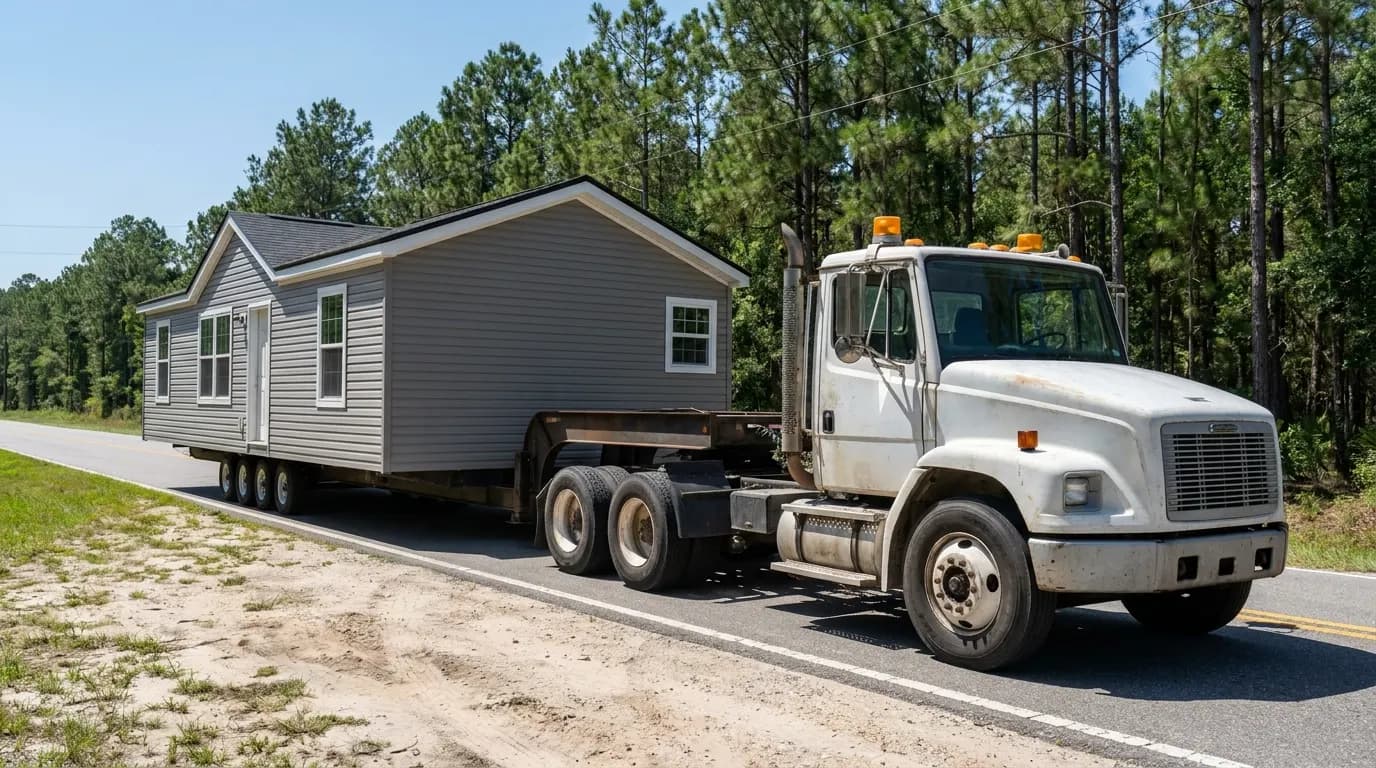
A used manufactured home priced under roughly twenty five thousand dollars tends to move fast. Sometimes within days of going up. Meanwhile a brand new home, better in every measurable way, sits. Nicer finishes, current wind zone, warranty, no deferred maintenance, and it waits.
People assume this is about bargain hunting. It is not really. It is about who is allowed to buy and what they have to do to close.
The mechanism: the cash pool is deep and the lending pool is shallow
Here is the whole thing in one idea.
A used home priced in the cash range does not need a lender. The buyer has the money, or they raise it from family, or they sell a vehicle, or the seller carries paper. Nobody has to approve anything. There is no appraisal, no underwriting, no loan committee reading a data plate.
A new home does need a lender, almost always. And manufactured home lending is a narrower world than most people expect.
If the home is going to be personal property, sitting on leased land or on land where the home and dirt are not merged into one real estate asset, the buyer is looking at chattel financing or an FHA Title I style loan. Those exist and they work, but the pool of lenders is smaller, terms are typically shorter, and rates run above what a mortgage on a site built house carries.
If the home is going to be real property on a qualifying permanent foundation on land the buyer owns, they can reach a conventional or government backed mortgage. FHA's Title II program, for example, requires exactly that: permanent foundation, land ownership, home treated as real estate. That is the good outcome, and it is also the slow one, because now you have a lender, an appraisal, a foundation certification and a closing timeline.
So the used home is fishing in a big pond with a short line, and the new home is fishing in a smaller pond with a very long one. That difference alone explains most of the speed gap.
Why the payment math also favors the used home
Run the numbers from the buyer's side.
On a new home, the buyer is committing to a monthly payment, plus insurance, plus ground rent or a land payment, plus taxes. In Central Florida that stack competes directly with the payment on a small site built house, and it often loses.
On a used home bought for cash, there is no payment. There is insurance, taxes, and whatever the land costs. The buyer's monthly obligation drops to almost nothing overnight. For a retiree on fixed income, a family recovering from a rough year, or somebody who just sold a house and wants out of debt, that is not a compromise. That is the entire point.
That buyer is not choosing the used home because they cannot afford better. They are choosing it because owning outright is the objective.
Why the land changes everything
Now add the acre.
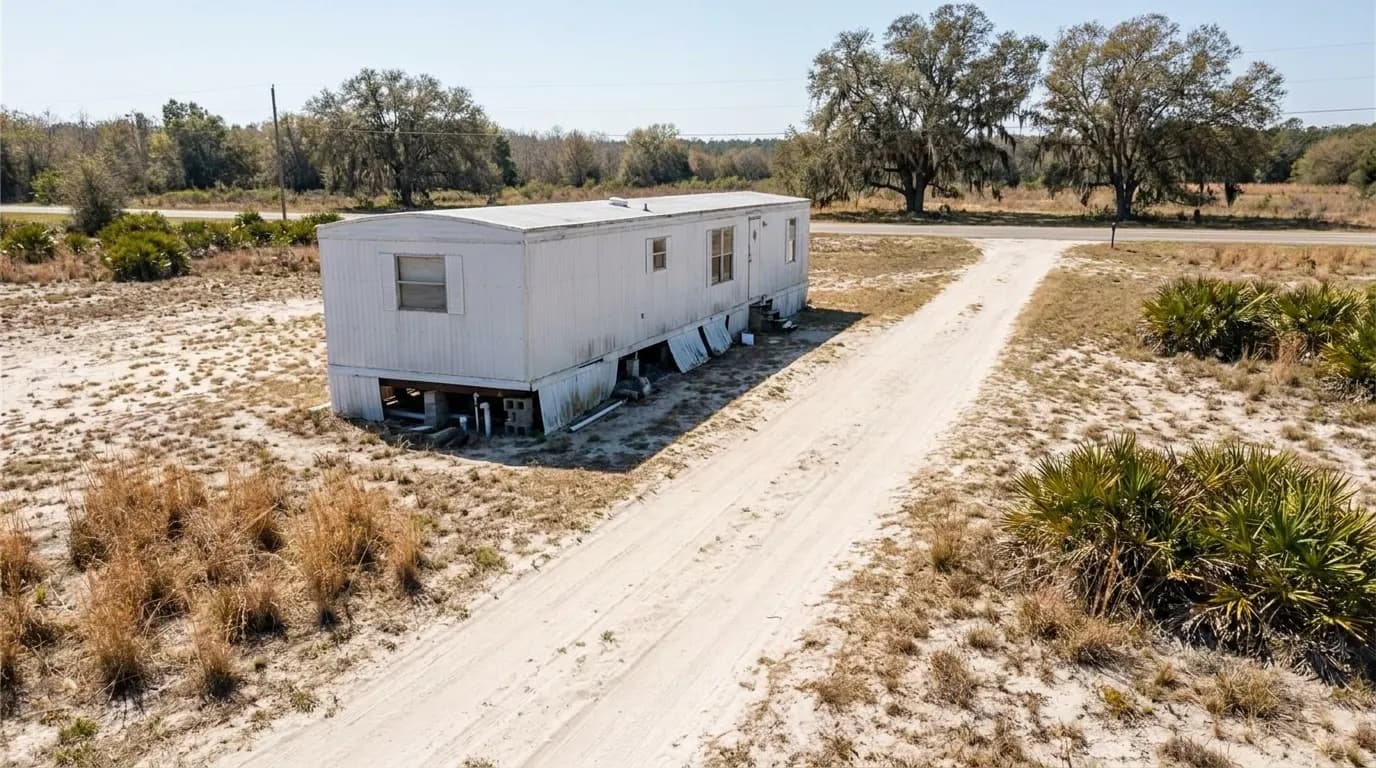
An older single-wide on its own land is a fundamentally different asset than the same home on a rented lot. The home depreciates. The land generally does not. Everything that makes manufactured housing feel like a poor investment applies to the structure, not the dirt under it.
A buyer looking at an older home on an acre is really buying the acre with a place to live already on it. If the home has ten good years left, that is ten years of housing while the land does what land does. If the buyer eventually replaces the home, they still own the site, the septic, the well, the power drop and the driveway. Those are real and expensive things that already exist.
That is why we look for homes on private land specifically, and it is why an older home on owned acreage frequently draws more interest than a newer home without it.
Why "old" is not the disqualifier owners think
Sellers with older homes are often apologetic about the year. In our experience the year matters far less than five other things.
Title status. A clean, transferable title with no stranded lien is worth more than a newer kitchen. A buyer paying cash can be ready in three days, and the title is what determines whether that is possible. If the records are tangled, read our piece on title versus deed.
Whether it is pre-1976. Homes built before 15 June 1976 predate the federal HUD Code. They have no certification label, financing is generally unavailable, many Florida counties restrict placing them on a new site, and many haulers decline to move them. That is a genuine cliff, and it sits in 1976, not 1986.
The roof, the floor and the frame. These are the expensive failures. Cosmetics are cheap. A soft floor around the tub, a separated marriage line, or frame rot is what turns a sale into a conversation about demolition.
Access and setup. Can a truck get to it. Is it properly blocked and tied down. Did somebody build a Florida room across the front that would have to come off before a move.
The wind zone on the data plate. Only matters if the home will be relocated, but when it matters it is decisive. See the wind zone article.
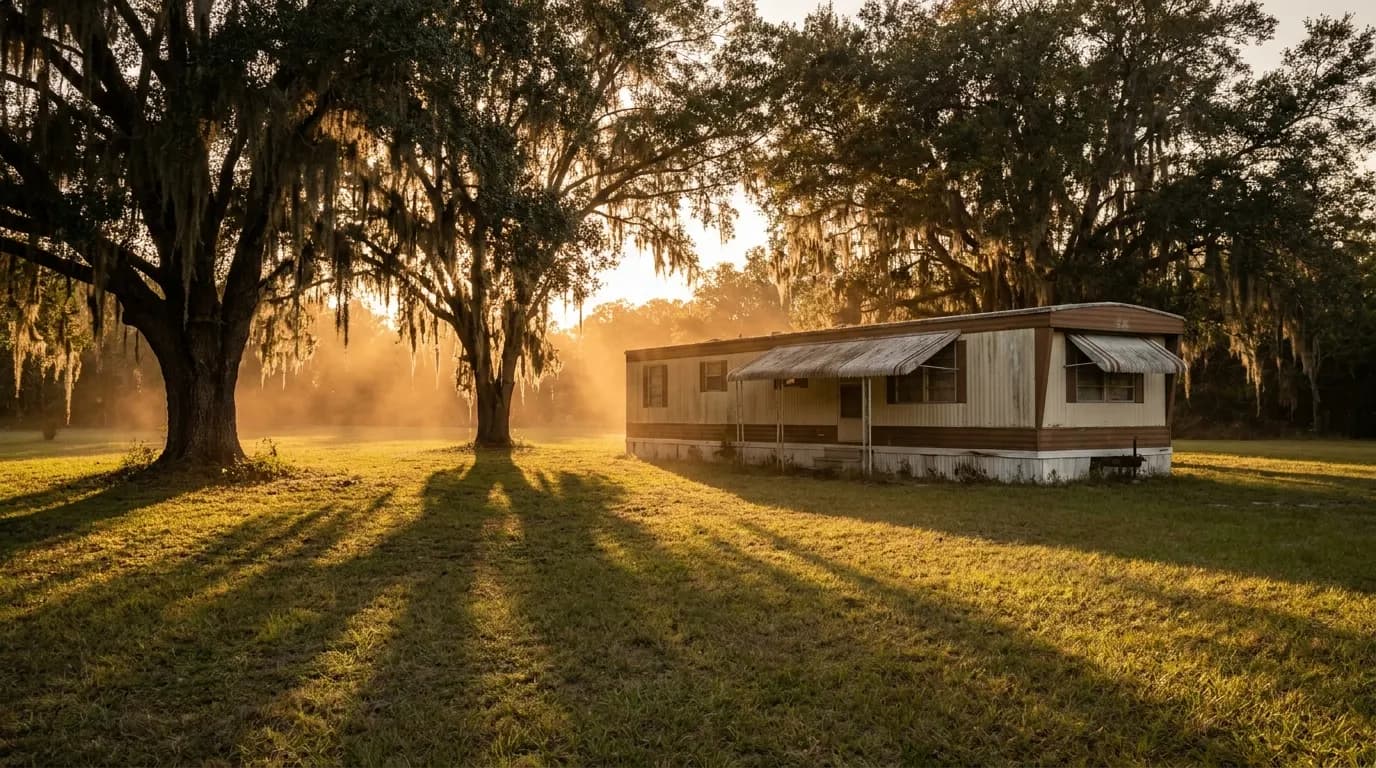
A tired looking 1994 doublewide with a solid frame, a good title and a real driveway is an easier sale than a pretty 2004 home with a lien nobody can release.
The mistake we watch owners make
Over-improving before the sale.
Somebody with an older home pours real money into new flooring, a kitchen remodel and paint, expecting to price it up accordingly. What tends to happen is that the home moves out of the cash pool into a bracket where buyers start wanting financing, and financing on an older manufactured home is exactly the bottleneck that made the cash pool attractive in the first place.
The cosmetic money rarely comes back proportionally. The repairs that do tend to earn their keep are the ones that stop a deal from dying: a roof that does not leak, a floor that is not soft, working power and water, and a septic that passes. Those are not upgrades, they are removals of objections.
If you are in a position where you need to be out quickly, the more reliable lever is a clean title and honest disclosure, not a new backsplash.
This is an observation, not a law of physics
Two caveats.
First, this is what we see in our market. Central Florida has a particular mix of retirees, rural acreage, seasonal demand and storm cycles. What is true here is not automatically true everywhere in the state.
Second, no home sells because of a category. Condition, access, title, location and timing all still apply, and any individual home can sit for reasons that have nothing to do with the pattern above.
What we can say confidently is that the reason the pattern exists is structural. It is about lenders, buyer pools and land, and those forces do not change quickly.
What this means if you own one
If you own an older manufactured home on land in Central Florida, you may have a more saleable asset than you have been told. The things worth doing first are unglamorous: locate the title, read the lien section, confirm the decal in the window, and take honest photos including the bad parts.
We buy manufactured homes on private land in Central Florida, including older homes, homes that need work, and homes that have to be moved off a property. Tell us what you have and we will give you a straight number and the reasoning behind it, including when we think you would do better selling it yourself. If you are on the buying side, here is what we have available, and our FAQ answers the questions we get most.
This article is general information about the Florida manufactured housing market and common financing structures. It is not financial, tax or legal advice, and it is not a prediction about what any particular home will sell for. Lending programs and their requirements change.
Sources: HUD, Financing Manufactured Homes (Title I); HUD, Manufactured Housing HUD Labels; Florida Statutes 320.0815