Ask what it costs to move a mobile home in Florida and you will get a number that is almost always wrong, because the person quoting it is quoting the haul. The haul is one of six bills.
We are not going to put dollar figures in this article. Transport pricing moves with fuel, insurance, escort availability and how busy the haulers are after a storm season, and a number written today would be misleading by spring. What does not change is the structure of the cost. If you understand the six pieces and what drives each of them, you can get real quotes and compare them honestly.
Bill one: disconnect and prep
Before anything rolls, the home has to be taken out of service and made roadworthy again.
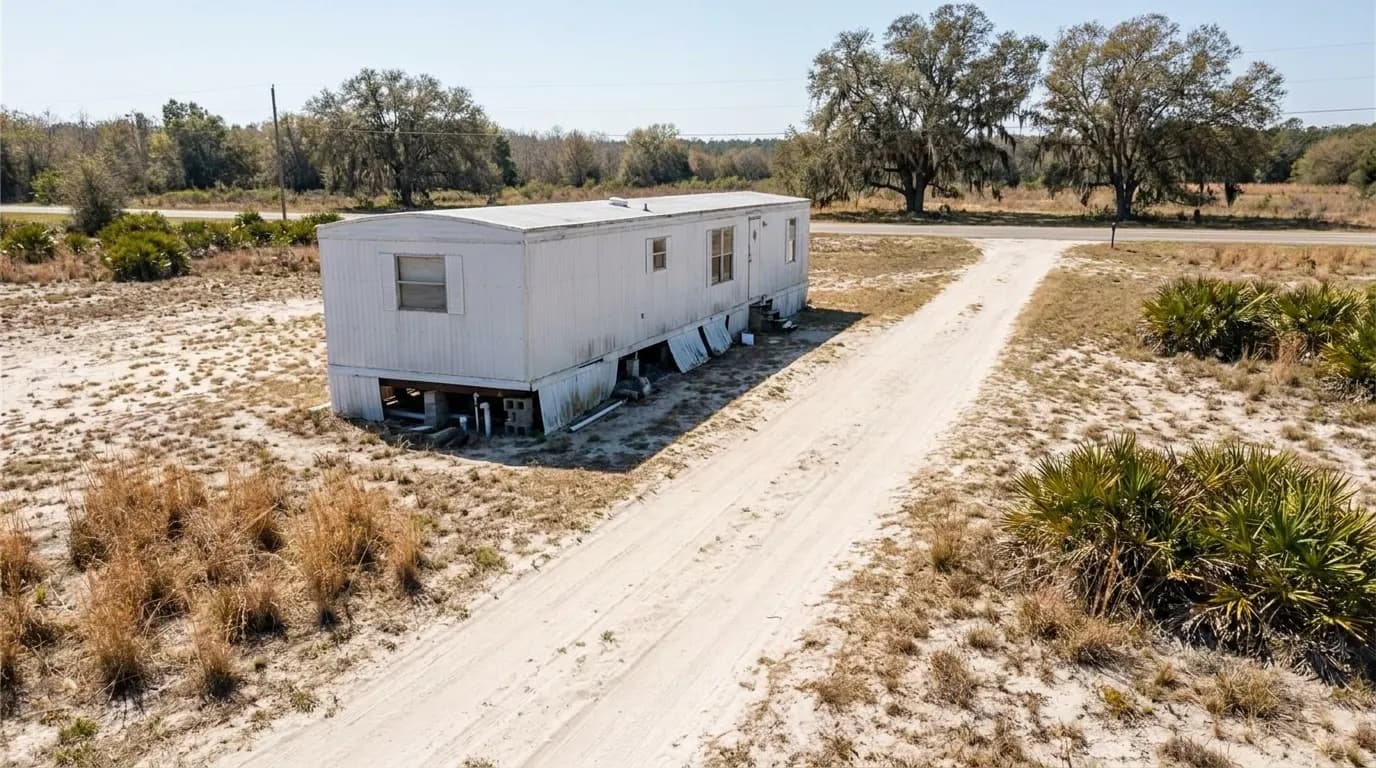
Skirting comes off. Water, sewer or septic, power and gas are disconnected. Anything added after the home was delivered has to come off or be demolished: carports, Florida rooms, screen enclosures, attached decks, permanent porches, sheds tied into the structure. In Central Florida, screen rooms and attached carports are on a large share of older homes, and they are almost never moveable.
Then the running gear. Axles, wheels, tires and the hitch have to be back under the home. On a lot of older Florida homes they were sold, scrapped or left to rot decades ago, and replacements have to be sourced and installed.
What drives this up: the number of additions, whether the home was set on a permanent foundation, and whether the running gear is missing.
Bill two: the permit and the route
Florida's legal load width is 8 feet 6 inches. Manufactured home sections are wider than that, so a permit from the Florida Department of Transportation's State Permit Office is part of every move on state maintained roads.
FDOT issues several permit types, including ten day trip permits and route specific blanket permits, and the route specific ones require a defined route to be submitted with the request. The route has to clear bridges, weight restrictions, overpasses, turning radii and construction. A straight line on a map is not necessarily a legal route, and the legal route is sometimes considerably longer.
What drives this up: width, length, the number of jurisdictions crossed, and any point on the route that forces a detour. Local roads and city streets can carry their own requirements on top of the state permit.
Bill three: escorts
Escort requirements scale with the width of the load under chapter 14-26 of the Florida Administrative Code. Narrower loads need flags and lights. Wider loads require one qualified escort, then two, and the widest loads can require law enforcement escort rather than civilian pilot cars. The rule also requires manufactured home loads to run warning lights at the corners.
Movement is generally limited to daytime hours. Weekend and holiday movement is restricted unless the permit allows it. That matters because a move that cannot be completed in a legal travel window becomes a two day move with an overnight staging cost.
What drives this up: width above all. A doublewide is two permitted loads with two escort requirements, not one load twice as wide.
Bill four: the haul itself
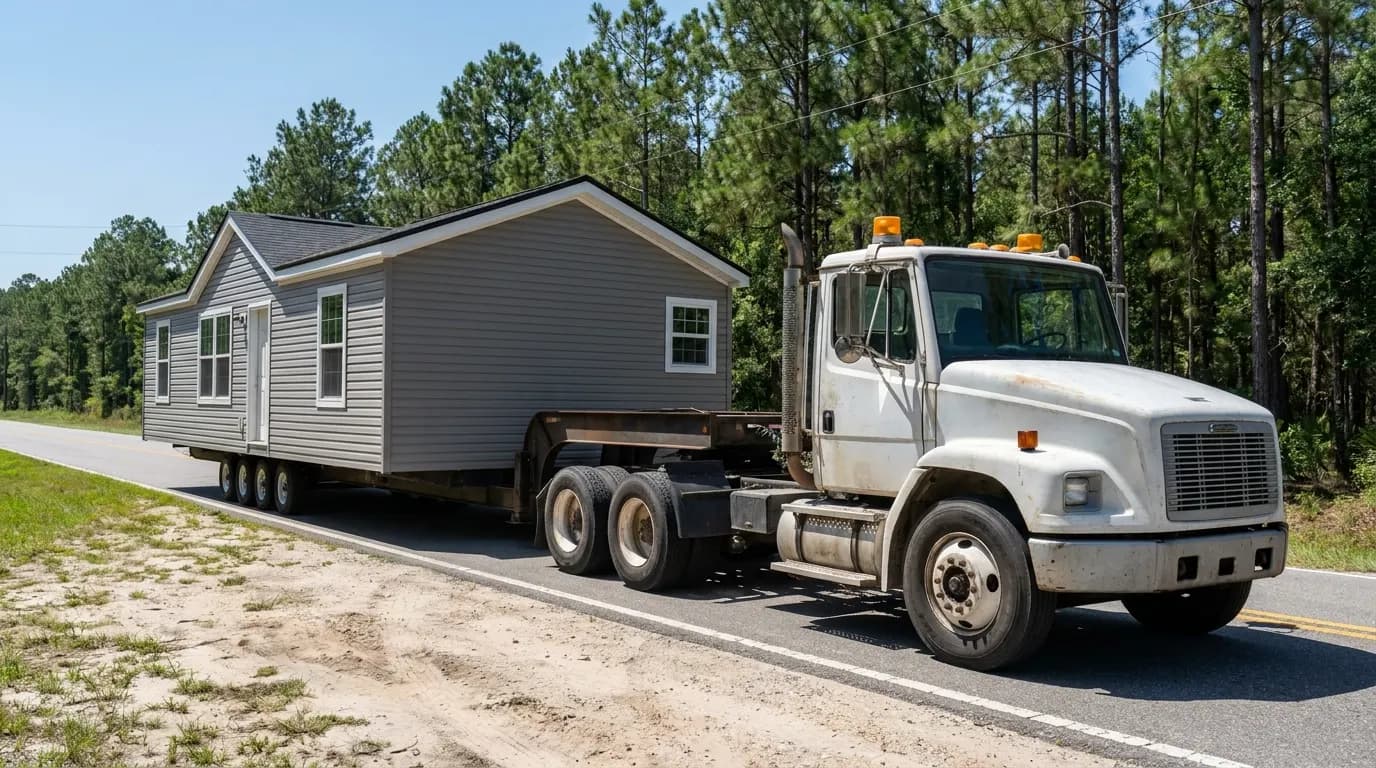
The transporter, the toter truck, the fuel, the crew, the insurance. This is the number people think of as "the move," and it is genuinely sensitive to distance, but less than owners expect. The fixed costs on both ends are heavy, so a ten mile move is not cheap, and doubling the distance rarely doubles the total.
What drives this up: multi-section homes, difficult access at either end, soft ground, and anything that turns a one day job into two.
Bill five: blocking, leveling, anchors and tie-downs
At the destination the home has to be set. In Florida that is a regulated job, not a favor from a friend with a bottle jack.
Installation has to be performed to the standards in chapter 15C-1 of the Florida Administrative Code, administered by the Department of Highway Safety and Motor Vehicles. Those rules cover piers and blocking, anchor types and holding power, frame ties, diagonal ties and longitudinal stabilizing systems. Anchors, piers and tie-down components have to be tested, listed and approved by the department's Bureau of Mobile Home and Recreational Vehicle Construction.
The rules also distinguish anchor requirements by the home's age and by wind zone, and Florida sits in the two highest zones. Tie-down density is higher here than it is in most of the country, which is exactly why Florida setup costs more than a quote from an out of state hauler suggests.
What drives this up: wind zone, soil conditions at the new site, and whether the home is going onto piers or a permanent foundation.
Bill six: the site and the reconnect
This is the one that blows up budgets, and it has nothing to do with the home.
If the destination is raw land, you may be buying a septic system and its permits, a well or a water tap, a power drop and a meter, a driveway or pad, and county permits for placement. Any one of those can rival the cost of the move. All of them together frequently exceed it.
If the destination is an existing improved site, this bill is small. If it is a cleared five acres off a dirt road, it is the biggest line item on the page.
What drives this up: everything about the destination, which is why you price the destination before you price the hauler.
The things that quietly decide the number
- Single-wide versus multi-section. A doublewide is two permitted loads, two escorts, two hauls, and a marriage line to reassemble and reseal. It is usually more than double a single-wide, not double.
- Age. Older homes are more fragile in transit. Some haulers decline pre-1976 homes outright, and some destinations will not accept them.
- Condition of the frame and floor. A home with a compromised frame or a soft floor may not survive the trip, and the hauler carries that risk.
- Wind zone compatibility. A home built for a lower wind zone than the destination requires cannot simply be re-permitted there. See the wind zone article for why this is a hard stop rather than a negotiation.
- Storm season. After a bad hurricane season, haulers, escorts and installers are all booked, and prices follow demand.
The break-even test, run honestly
Here is the arithmetic that matters, and a lot of owners do not want to do it.
Take what the home is realistically worth right now, where it stands, in its current condition. Add the six bills above plus site work at the destination. Then ask what the home will be worth once it is set up at the new location.
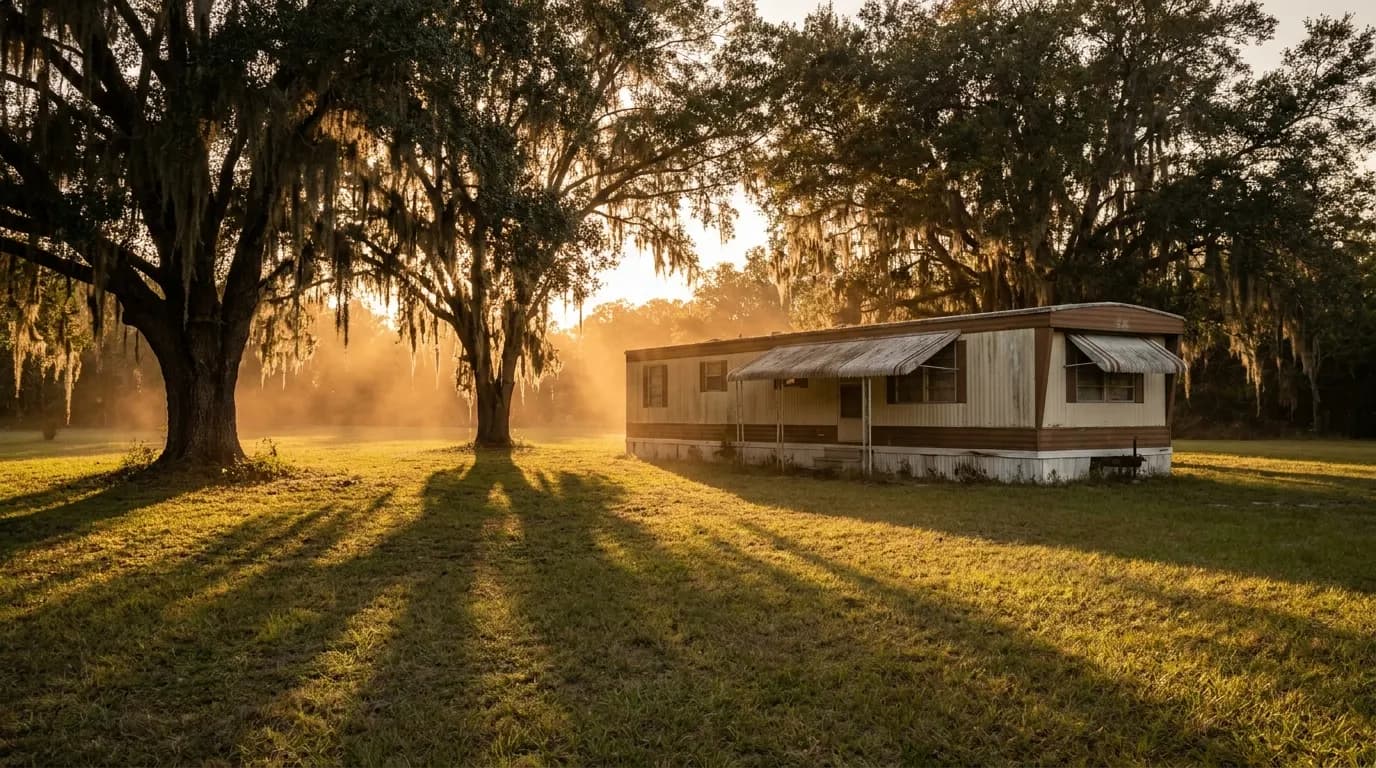
For a well kept newer multi-section home going onto improved land you already own, moving can absolutely make sense. For a 1980s single-wide with a tired roof and a soft floor, the total commonly exceeds what the home will be worth when it arrives. You can spend more than the asset is worth and end up owning the same old home, now with a thousand miles of road stress in it.
That is the case where selling in place, or selling to a buyer who handles the removal, comes out ahead even though it feels like giving something up.
If you want a straight read before you spend anything
We buy manufactured homes on private land in Central Florida, including homes that need to be moved off a property. We have been through the permit and setup process enough times to tell you quickly whether a specific home is a realistic mover or a demolition candidate.
Send us the details of the home and we will give you our honest read, including when the answer is that moving it does not pencil out. If you are on the other side of this and looking for a home, see what we have.
This article is general information. Permit requirements, escort rules, installation standards and local placement rules vary by location and change over time. Confirm current requirements with FDOT, FLHSMV, your licensed installer and the receiving county before committing to a move.
Sources: FDOT Over-Weight Over-Dimension Permits; Florida Administrative Code Chapter 14-26, Safety Regulations and Permit Fees for Overweight and Overdimensional Vehicles; Florida Administrative Code Chapter 15C-1, Installation Standards