Almost every complicated manufactured home sale we see in Central Florida traces back to one unexamined assumption. The owner believes they own a property. What they actually own is two things, recorded in two different places, governed by two different sets of rules.
The land is real property. It has a deed, recorded with the Clerk of Court in the county where it sits, and it shows up in the Property Appraiser's records.
The home is, by default, personal property. It has a certificate of title issued by the Florida Department of Highway Safety and Motor Vehicles, with a VIN and an owner of record, in the same record system that handles cars and boats.
Once you see it that way, most of the confusion resolves. And the mismatches that stall sales become findable in an afternoon.
Why Florida works this way
A manufactured home leaves the factory as a titled unit. It is built to a federal standard, transported on a chassis, and registered as a moveable thing. Putting it on land and living in it for thirty years does not automatically change that.
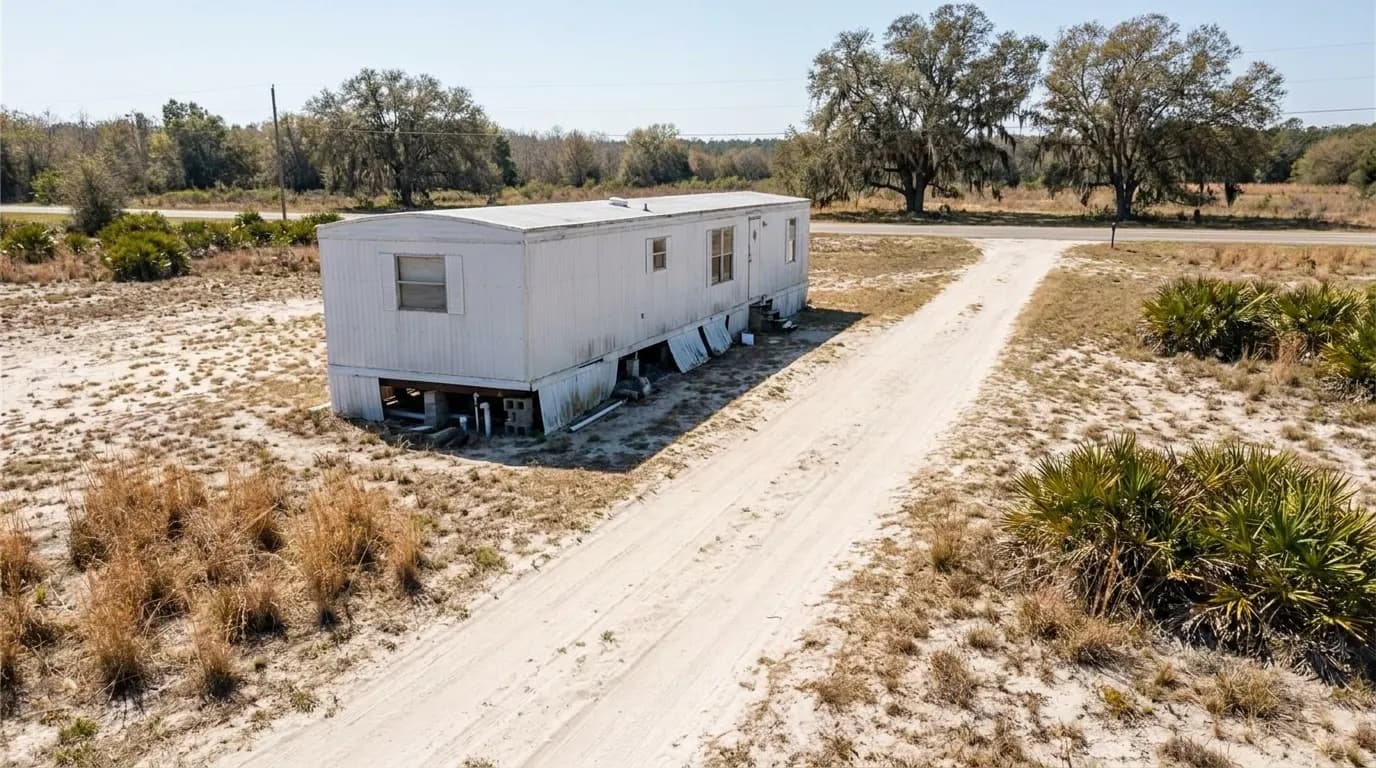
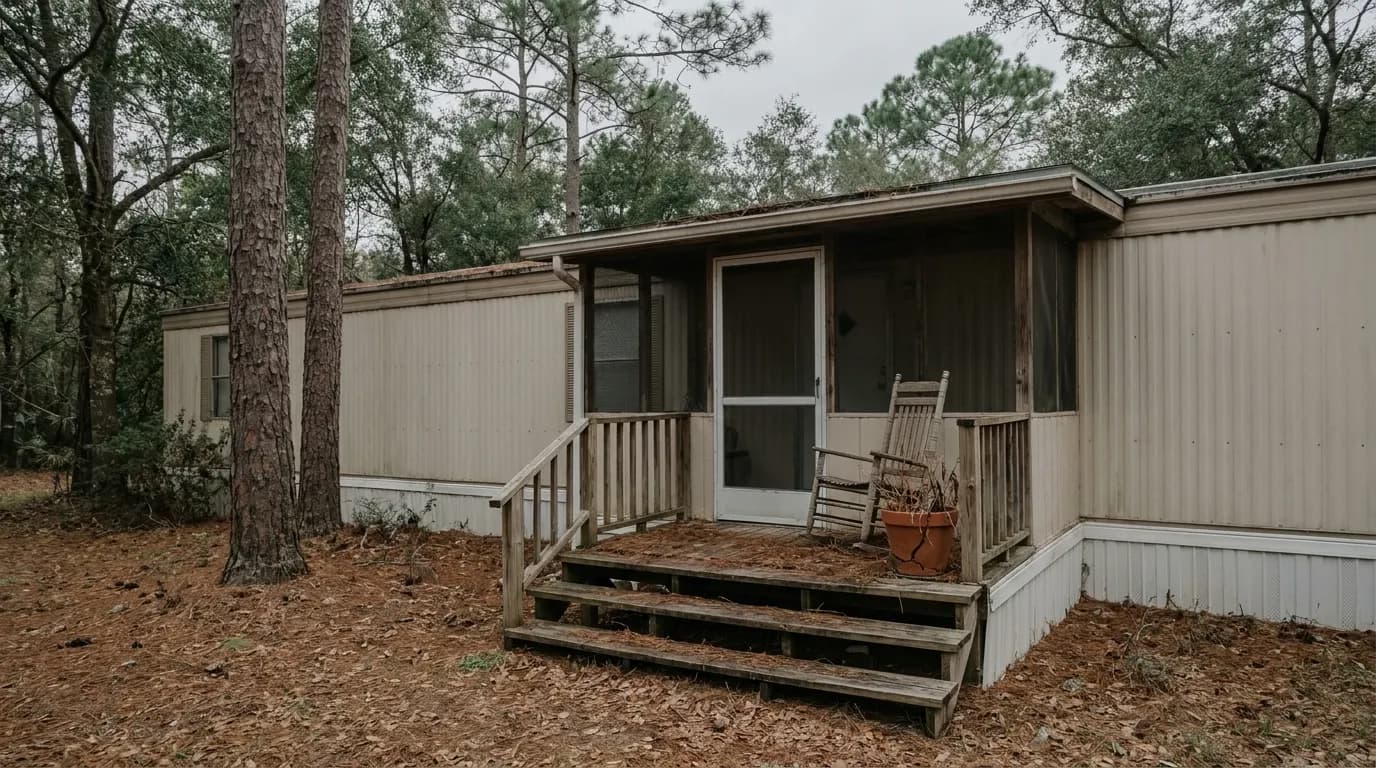
A 1998 doublewide on five acres with a block skirt, a concrete drive, a septic system and an attached carport is still a titled vehicle in the eyes of the state if nobody ever filed the paperwork to change it. That is the default, not the exception.
There are two things an owner can do about it, and they are not the same thing, though they get talked about as if they were.
Declaring the home real property and getting an RP decal. The owner takes a Declaration of Mobile Home as Real Property, Florida Department of Revenue form DR-402, to the Property Appraiser, and then to the Tax Collector, who issues a permanent RP sticker in place of the annual MH decal. This requires the same owner names on both the home title and the land deed. It is handled in section 320.0815 of the statutes.
Retiring the title. A separate and much heavier step under section 319.261. The title itself is surrendered and retired, documents are recorded with the county clerk, and the home legally becomes part of the real property. After that the statute says the home may only be transferred together with the land it is affixed to.
We go through the difference in detail in the RP decal article, because owners routinely believe they did the second when they only did the first.
The four checks that tell you where you stand
You do not have to guess, and you should not wait for a closing agent to find out for you.
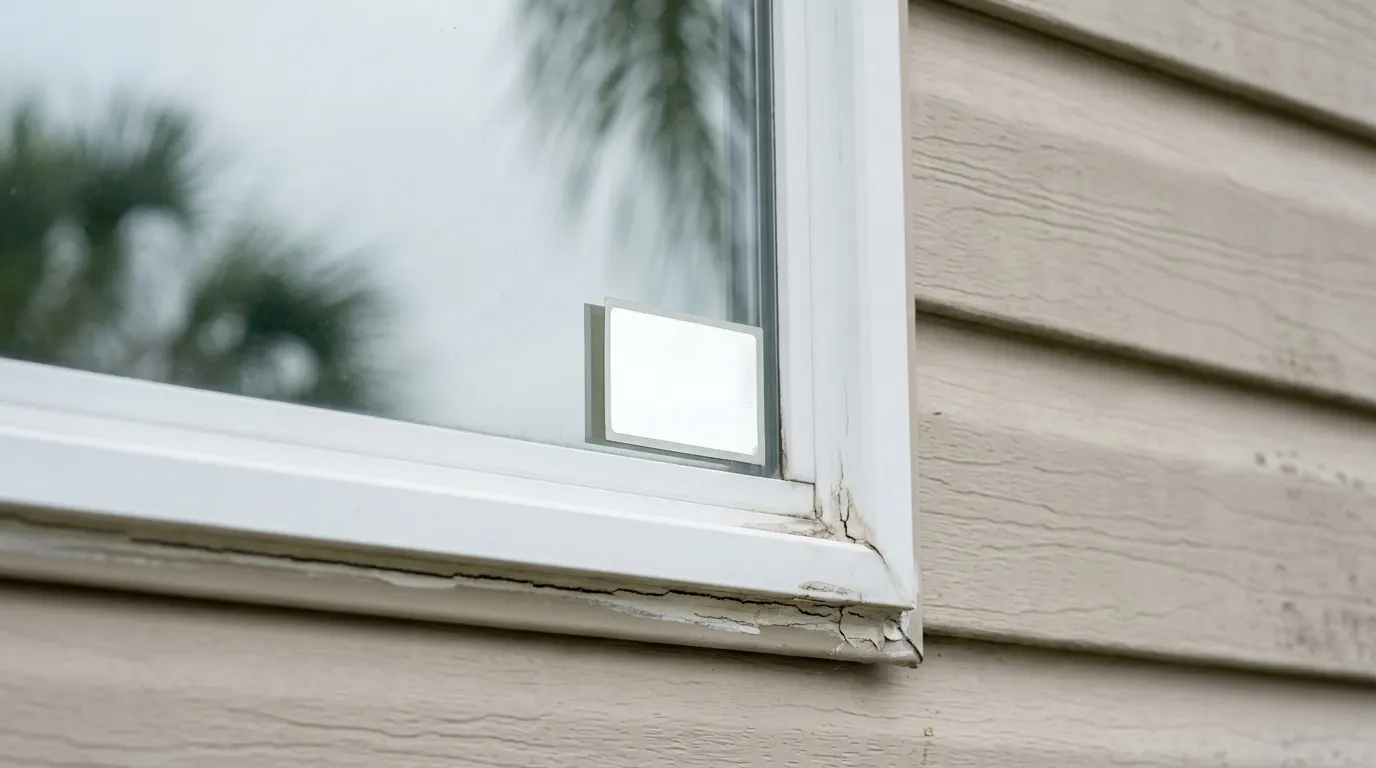
Look in the window. Florida requires the decal to be affixed to the lower left corner of the window closest to the road providing access to the residence. An RP sticker there means the home was declared real property. An MH decal with a year on it means the home is still registered as personal property.
Pull the Property Appraiser record for the parcel. Most Florida counties put this online and free. If the home appears as an improvement valued together with the land, that points toward real property treatment. If you are also being billed separately on the home as tangible or personal property, that points the other way.
Find the title. If a Florida certificate of title for the home still exists in your name, the title was not retired. That is not a problem. It is just a fact you need to know. While you have it out, read the lien section.
Search the county's official records for the parcel. Title retirement under 319.261 involves recording documents with the clerk. If you or a prior owner did it, there is a record against the property.
If those four checks agree with each other, you are in good shape. If they disagree, you have found the thing that would have blown up a closing in week three.
The mismatches we actually run into
Names do not match. The deed says one thing, the title says another. A marriage, a divorce, a death, a trust, a quitclaim to a child. The RP process requires matching names, and a buyer's closing agent will require a clean chain on both.
An old lien was never released. The loan was paid off in 2007, the lender was acquired twice since, and the security interest is still printed on the title. Nobody owes anything and nothing can close until the release is produced.
Half a conversion. Someone got an RP sticker and believed the title was retired, or started a retirement and never finished the recording. The home sits in a gap where neither record system fully describes it.
No title at all. The home has changed hands twice on a handshake and a bill of sale. Each of those transfers is a link that has to be reconstructed.
All of these are fixable, and all are far easier to fix before a buyer is under contract with a financing clock running.
What it means for how you can actually sell
This is where the record status stops being paperwork and starts being money.
Home titled, land deeded, sold together. Two transfers in one deal. The deed conveys the land, the title conveys the home. Perfectly normal, and it is how a large share of on-land sales in Central Florida close.
Home titled, sold separately from the land. You keep the dirt, the buyer takes the home off the property. Only possible if the home is still titled or the title can be reinstated. This is a real option and it is the one most landowners do not know exists. See selling a home that has to be moved.
Title retired. The home and land move together, period, until a new title is issued. Reinstating requires an affidavit from the land owners and all secured parties and lienholders consenting to removal, plus a title insurance certification identifying all owners and lienholders dated within ten days.
The second and third options are opposites, and owners pick between them without realizing they are picking. If there is any meaningful chance the home should be sold separately from the land someday, retiring the title works against that.
How this affects your buyer's financing
Record status also shapes who can buy from you, which shapes your price.
A home that is titled personal property is generally financed, if at all, as a chattel loan. Those exist, but the pool of lenders is smaller and the terms are typically shorter and dearer than a mortgage. Cash buyers and owner financing fill a lot of that gap.
A home that has been properly made part of the real property, on land the owner holds, on a qualifying permanent foundation, opens the door to conventional and government backed mortgage programs. FHA's Title II program, for instance, requires the home be on a permanent foundation and treated as real estate, while its Title I program is built for homes financed as personal property. Our financing page covers what that means in practice for a Florida buyer.
Wider buyer pools generally support stronger prices. That is not a promise about your specific home, which depends on condition, location, access and the market at the time, but the direction is consistent.
Start with the paperwork, not the price
If you own a manufactured home on your own land in Central Florida and you are thinking about selling in the next year, do the four checks now while nothing is under contract. Find the title, read the lien section, pull the Property Appraiser card, and look at the sticker in the window.
We buy manufactured homes on private land across Central Florida, including homes with title problems and homes that need to come off the land. If the records do not agree and you are not sure what you are looking at, send us what you have and we can usually tell you which path you are on. More about who we are and how we work.
This article is general information about Florida titling and property records. It is not legal or tax advice. Statutes and county procedures change and individual situations vary, so consult a Florida real estate attorney, your county Property Appraiser, or FLHSMV for your specific property.
Sources: Florida Statutes 320.0815; Florida Statutes 319.261, Retirement of mobile home certificate of title; Florida Department of Revenue form DR-402, Declaration of Mobile Home as Real Property; FLHSMV procedure RS-10, Mobile Home Registrations