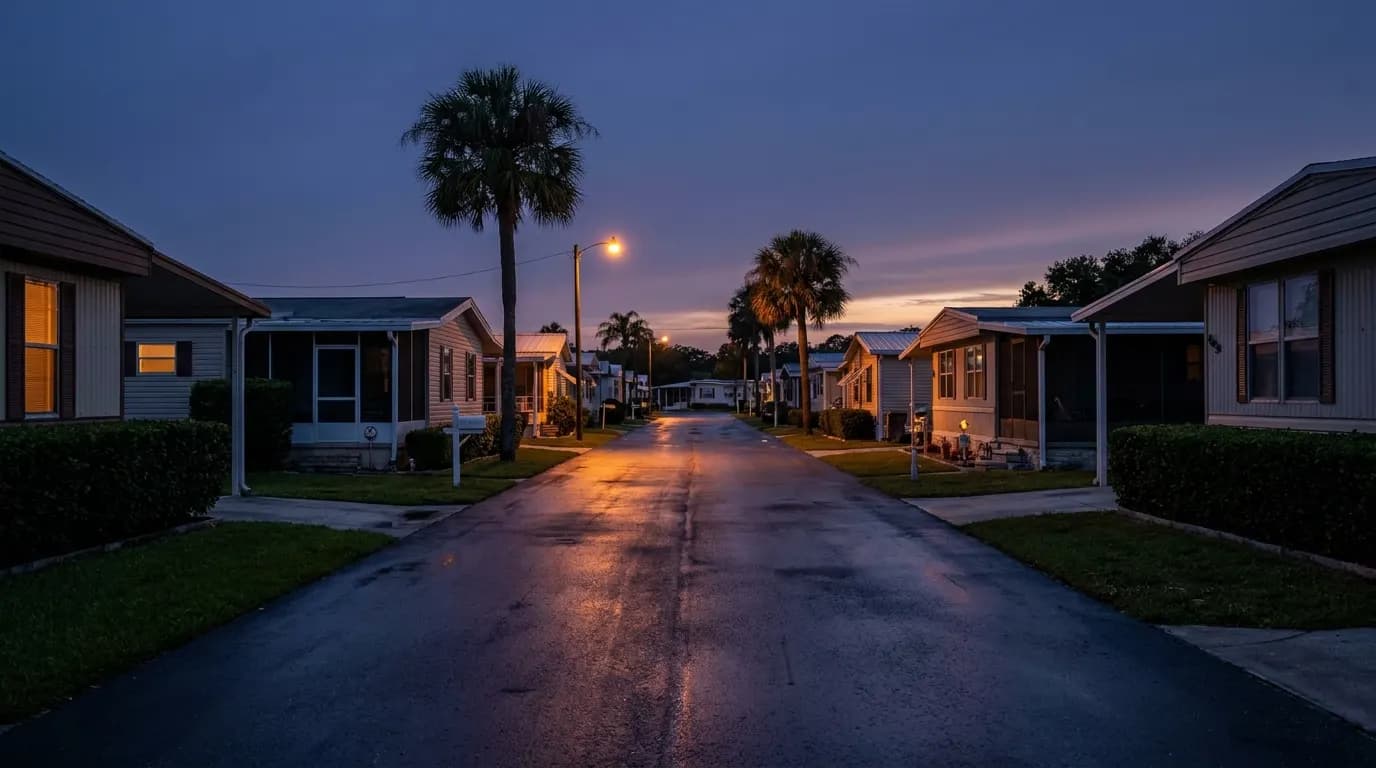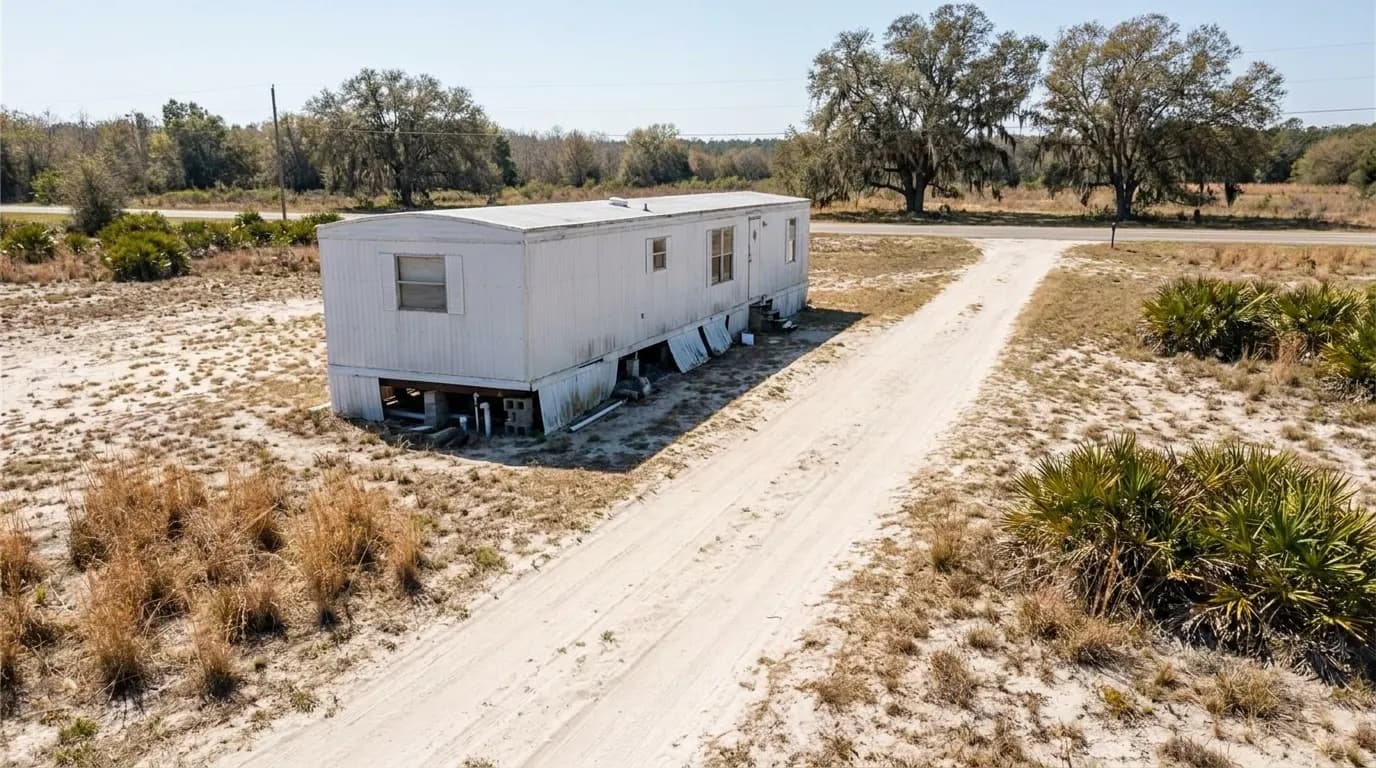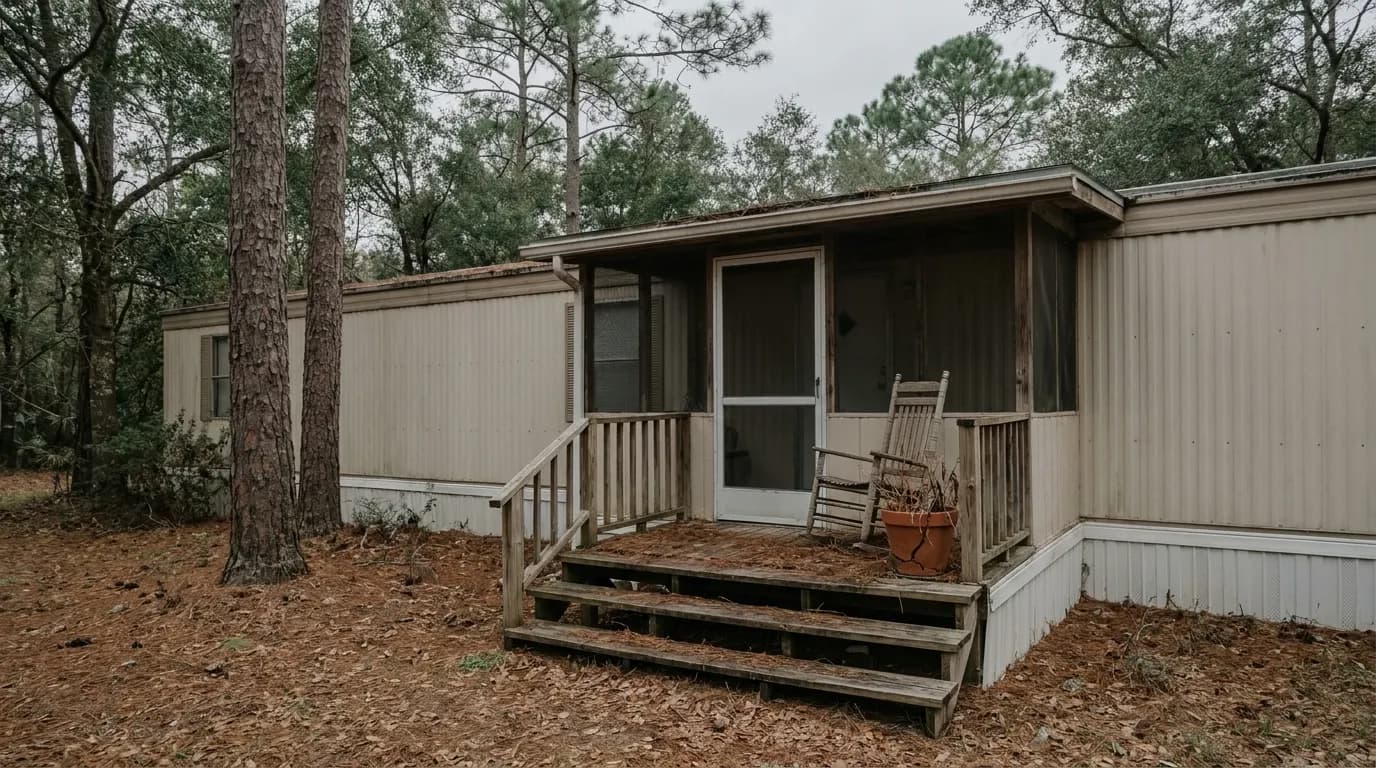
A seller has a buyer. Price agreed, cash in hand, everybody wants to close this month. Then somebody reads the lease.
There is a clause requiring the home to be offered to the property owner first, on the same terms, with a window to respond. Or a substantial sum has to be posted before the home can leave the site. The buyer who was ready on Tuesday is now waiting on somebody else's decision with no date attached, and buyers who are waiting go look at something else.
Neither clause forbids the sale. That is what makes them so effective.
This article is general information about Florida law and common contract terms. It is not legal advice. Statutes change, lease language varies enormously, and whether a specific clause is enforceable is a question for a Florida attorney reviewing your actual documents.
Clause one: the right of first refusal on the home
A right of first refusal, in plain terms, says that before you can sell to an outside buyer, you have to give someone else the chance to buy on those same terms. Typically there is a notice requirement and a fixed window to accept or decline.
Most people have heard of a right of first refusal in a different context, and the two get badly confused.
The statutory one is about the park, not your home. Section 723.071 of the Florida Statutes deals with the sale of mobile home parks. When the park owner receives a bona fide offer to purchase the park and would consider selling, the officers of the homeowners' association must be notified of the price and material terms, and the homeowners have a limited window, generally 45 days from mailing of the notice unless otherwise agreed, to execute a contract meeting those terms. The statute is also clear that the park owner is under no obligation to sell to the homeowners, is not required to interrupt or delay other negotiations, and may contract with other parties.
That is the association's chance to buy the whole property. It is not a clause about your individual home.
The one that stalls your sale is a lease term. Chapter 723 does not, as written, hand a property owner a statutory right of first refusal over a resident's home. When that right exists, it exists because it was written into the lease, the prospectus or the community rules, and somebody signed it, often years ago and often without reading it.
The practical effect is delay and doubt. A cash buyer will not hold a number open indefinitely while a third party decides, and one who does wait will reprice the risk. A home that has been offered, withdrawn and re-offered also starts looking shopworn.
Clause two: the move-out bond
The second pattern goes by different names: a removal bond, a relocation deposit, a road repair bond, a site restoration deposit.
The stated rationale is usually reasonable on its face: moving a home tears up roads, damages utility connections, and leaves a site that needs work. The bond is framed as security against that damage.
The effect on a seller is not reasonable at all. A large sum that has to be posted before the home can leave changes what the home is worth to every buyer who intends to move it, dollar for dollar and then some, because it also introduces a refund process that may or may not go well.
Here is where Florida law gets interesting, and we have to be careful about how far we take it.
Section 723.041 of the Florida Statutes addresses entrance fees and exit fees. The statutory language includes that "No person shall be required by a mobile home park owner to pay an exit fee upon termination of his or her residency," and that no entrance fee may be charged by the park owner to the purchaser of a mobile home situated in the park that is offered for sale by a resident. The section also provides for prorated refunds of entrance fees where a home is removed within two years.
What we cannot tell you is whether any particular bond, deposit or restoration charge falls inside that prohibition. A refundable damage deposit and a non refundable exit fee are not obviously the same thing, the drafting matters, and that is exactly the question a Florida attorney should answer on your documents. What we can tell you is that the statute exists, it is short, and it is worth reading before you accept a number as simply how it works.
Why these two clauses are more damaging than they look
Think about it from the buyer's side.
A buyer of a home that has to be relocated is already carrying real uncertainty. They need a destination that will accept the home, and the wind zone has to work, which we cover in the wind zone article. They need a hauler, a permit, escorts and a licensed installer, and they need the ground and the route to cooperate. That is a lot of moving parts before anyone talks about price.
Add a clause that means the seller cannot actually commit for another 30 or 45 days, and add a bond that has to be funded before anything can move, and the deal stops being attractive. Not impossible. Just worse than the next one.
Sellers tend to interpret the resulting silence as a soft market. Usually it is a document problem wearing a market's clothes.
What to do before you market the home
Do this first. It is the difference between a clean sale and three dead deals.
Pull every document and read all of it. The lease or rental agreement, the prospectus if one applies, the rules and regulations, and any addenda you signed at renewal. Section 723.031 governs the rental agreement, and statutory provisions are deemed part of it.
Write down the exact mechanics of any right of first refusal. Who must be notified, in what form, what must be disclosed, how long the window is, what happens if they decline, and whether a decline is good for a fixed period or has to be re-run for each new buyer.
Ask for a written waiver or a written decline in advance. Where the property owner has no interest in buying the home, many will say so in writing if asked directly. A waiver in hand before you go to market converts an unknown into a known and is worth real money.
Get the bond requirement in writing, with the refund conditions. What triggers it, what it covers, how it is released, and who decides. If it exists only as something the manager says at the counter, that is worth knowing too.
Have an attorney read it if the numbers are meaningful. This is not us being cautious for form. Against a clause worth thousands, an hour of a Florida attorney's time is cheap.
Take the answers to your buyer up front. A buyer who knows about a 45 day window on day one can plan around it. A buyer who finds out on day 30 walks.
The version of this that has no clause at all
These clauses have power because the home sits on ground the seller does not control. Everything downstream of that is negotiation with somebody whose interests are not yours.
A manufactured home on land the owner holds is a different transaction entirely. There is no third party window, no bond, no approval of the buyer as a tenant. The seller decides, and the only records to reconcile are the home's title and the land's deed, which we walk through in title versus deed.
That is not advice to go buy an acre in the middle of a rent problem. It is why we work the way we do.
What we buy
We buy manufactured homes on private land across Central Florida, and homes that can be moved. Landowners are our priority, and a home that is free to leave a site without a third party's permission is the kind of deal we can close cleanly.
If you own land with a home on it, or you have a home that needs to come off a property, send us the details. If you want to understand our process before you call, read more about us or check the FAQ.
Sources: Florida Statutes 723.041, Entrance fees; refunds; exit fees; Florida Statutes 723.071, Sale of mobile home parks; Florida Statutes 723.031, Mobile home lot rental agreements; Florida Statutes Chapter 723