Two Florida owners can both tell you their manufactured home "is real property now," and be in completely different legal positions. One can sell the home off the land next month. The other cannot sell it separately at all until a lienholder signs something.
The difference is whether they got an RP decal or retired the title. These get used interchangeably in conversation, at closings, and unfortunately on a lot of websites. They are separate procedures with separate consequences, and if you might ever want to move the home, the distinction is the most important thing on this page.
The RP decal
Florida requires manufactured homes to display a decal. Section 320.0815 sets it out, and it names two kinds.
The ordinary one is the MH decal, renewed annually through the county Tax Collector, which is what a home carries when it is registered as personal property. This is the default and it is what most homes on rented ground carry.
The other is the RP series sticker. You get one when the home qualifies to be assessed as real property along with the land. The process runs through two offices:
- Take a Declaration of Mobile Home as Real Property, Florida Department of Revenue form DR-402, to your county Property Appraiser, along with your title, registration or bill of sale. The names on the home title and the names on the land deed have to match.
- Take the approved form and the fee to the Tax Collector, who issues the RP sticker.
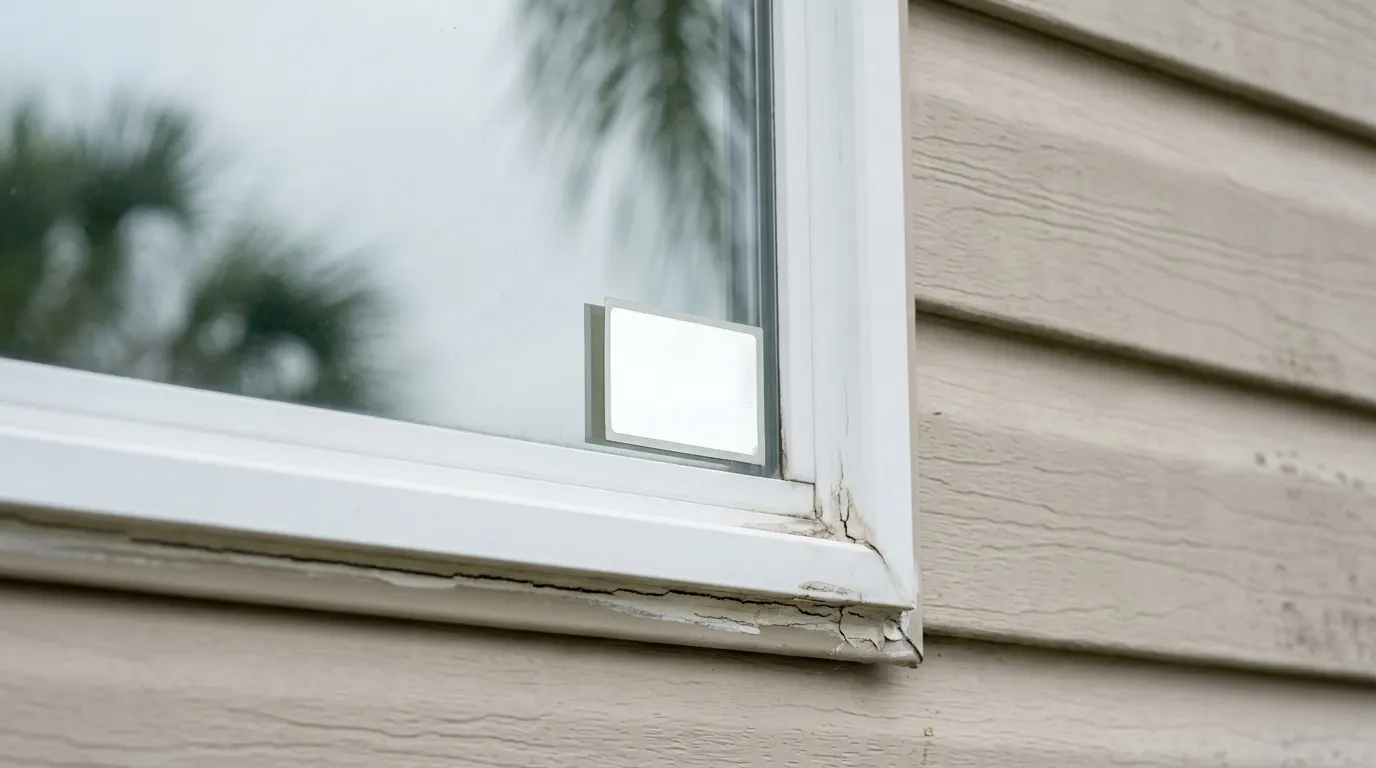
The statute even specifies where it goes: the lower left corner of the window closest to the street or road providing access to the residence. Go look at yours right now. It tells you something.
An RP decal does not expire. It is permanent as long as the home is not moved. The home is then assessed and taxed as part of the real estate rather than carrying an annual registration.
What the RP decal does not do is destroy the certificate of title. The title still exists. That is the whole point of the next section.
Retiring the title
Retiring the title is a different, heavier act, and it lives in section 319.261 of the Florida Statutes.
It applies when the home is permanently affixed to real property owned by the same person, including certain long leasehold interests. To retire the title, the owner records a set of documents with the county clerk: the original certificate of title with the home's identifying information and any lienholder's statement releasing its interest, the legal description of the real property, and a sworn statement by the owner of the real property that they own the home.
The form used with FLHSMV is HSMV 82109, Application for Retirement of a Mobile Home Certificate of Title or Reinstatement of a Retired Mobile Home Certificate of Title. An RP decal is a prerequisite. This is the reason the two get conflated: you cannot retire the title without doing the RP step first, so people who have done both often remember it as one visit.
Once the title is retired, the home is part of the real property. The statute is direct about what follows: it may only be transferred together with the property to which it is affixed, and it can only be encumbered through a mortgage or deed of trust on the real property, not by a separate security interest on the home.
Why owners do it
There are real reasons, and we are not against it.
The home stops carrying an annual registration. The home and land become one asset for tax assessment, financing and conveyance. A buyer can more readily reach conventional and government backed mortgage financing when the home is properly part of the real estate on a qualifying permanent foundation, which widens your buyer pool. Our financing page goes into what lenders are actually looking for.
For an owner who intends to keep a home on their own land for the rest of their life and eventually sell home and land together as one property, retiring the title is a reasonable thing to have done.
The consequence nobody explains at the counter
Here is the part that matters to the people who call us.
If you later want to move the home, or sell it separately from the land, a retired title has to be reinstated. Section 319.261 spells out what that takes:
- An affidavit signed by the owners of the land and all secured parties and other lienholders, consenting to the removal of the home from the real property.
- A certification from a title insurance company or licensed attorney, dated within ten days of the application, identifying all owners of the land and all lienholders.
Read that first bullet again. If there is a mortgage on the land, your mortgage holder has to agree to let the home leave the collateral. They may. They may not. They may take weeks to route the request to somebody who has ever seen it before.
That is a very different position from an owner who only ever got an RP decal. In that case, moving or selling the home separately means surrendering the RP status and going back onto an annual MH decal. That is a Tax Collector transaction, not a negotiation with a lender.
The practical rule we give people
If there is any realistic chance that the home should be sold separately from the land, or moved, do not retire the title.
That covers more situations than owners expect:
- Acreage that might be sold to a builder or a neighbor later.
- Land that will eventually go to children who want the dirt but not the 1997 doublewide.
- A home that will reach the end of its life before the land does, which is most of them.
- Any parcel where a newer home might replace the current one.
An RP decal already gets you the tax treatment. Retiring the title mainly buys clean single asset conveyance, and it charges you flexibility to get it.
How to find out what you actually have
Four checks, all doable in an afternoon:
- Look at the window sticker. RP series, or an MH decal with a year on it.
- Look for the paper title. If a Florida certificate of title still exists in your name, the title was not retired.
- Search the county official records against your parcel. Retirement involves recording with the clerk, so there is a record if it happened.
- Pull the Property Appraiser card. See whether the home is valued as an improvement with the land.
If those four do not agree, you have found something worth resolving before you are under contract. Half finished conversions are common. Someone gets the RP sticker, believes the title is gone, and the title is sitting in a drawer or was never surrendered.
Where we fit
We buy manufactured homes on private land across Central Florida, including homes that need to come off the land and be moved. Title status is one of the first things we look at, because it determines what is even possible.
If you are not sure whether your title is live, retired, or halfway through something, send us what you have and we can usually work it out from the decal, the tax record and the title. If you would rather just understand the landscape first, our FAQ covers the common questions and our title versus deed article explains the two record systems in full.
This article is general information about Florida titling and registration procedure. It is not legal or tax advice. Statutes, forms and county procedures change, and individual situations vary. Confirm current requirements with FLHSMV, your county Tax Collector and Property Appraiser, or a Florida attorney.
Sources: Florida Statutes 320.0815, Mobile homes and recreational vehicle-type units required to have appropriate license plates or stickers; Florida Statutes 319.261, Retirement of mobile home certificate of title; FLHSMV form HSMV 82109; FLHSMV procedure TL-39; Florida Department of Revenue form DR-402